

Barbers and Surgeons: Two Trades, One Company
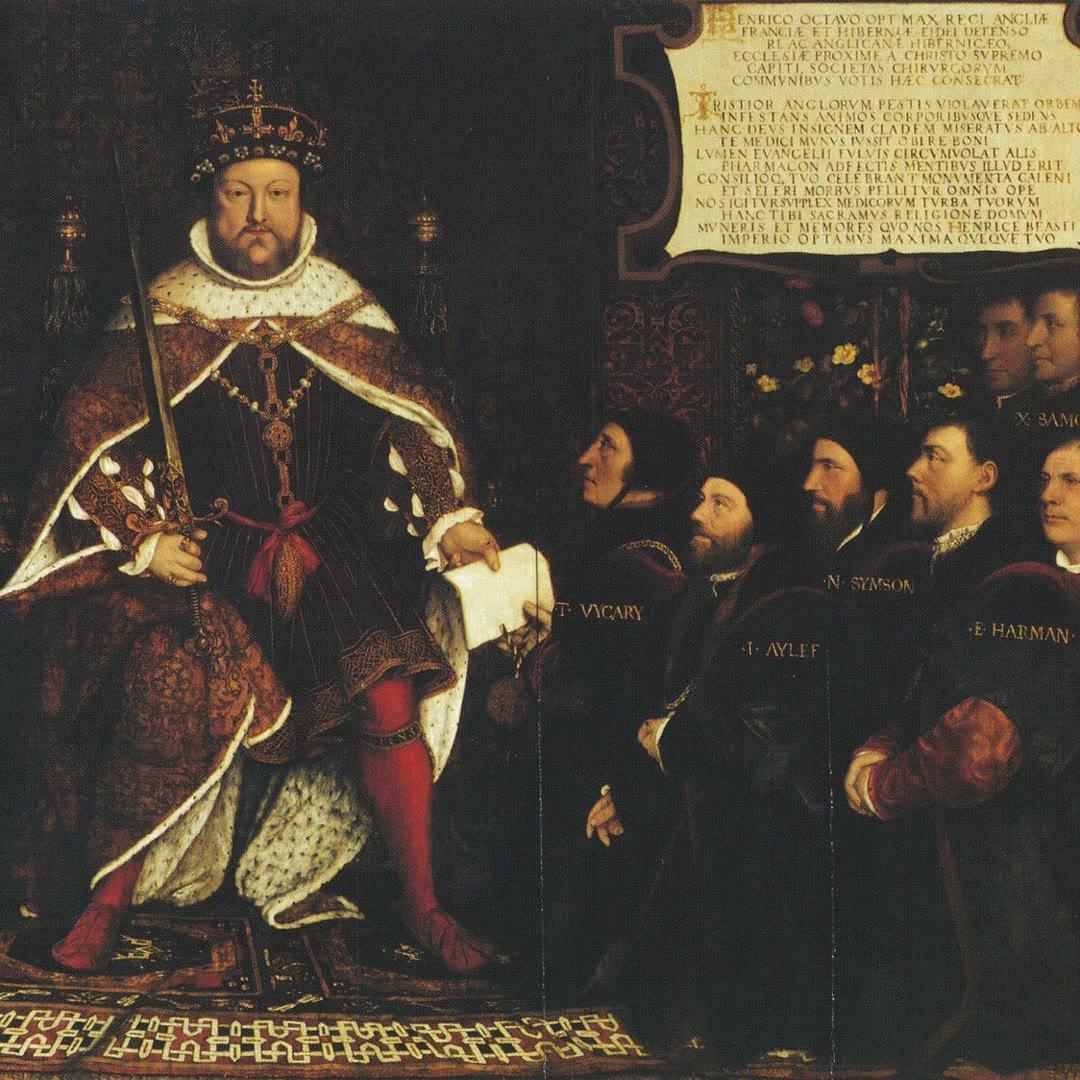
For two hundred years, the man who shaved you and the man who set your broken arm belonged to the same London company. The arrangement began with an Act of Parliament in 1540, which merged the barbers with the Fellowship of Surgeons to form the Company of Barbers and Surgeons.
A painting to mark it
Hans Holbein recorded the moment in a painting of Henry VIII handing the company its charter. Receiving it is Thomas Vicary, the first Master, who was also superintendent of St Bartholomew's Hospital and a royal physician. The company was granted combined arms in 1569, and its crest, supporters and motto are still in use.
Razors on one side, scalpels on the other
The 1540 Act was clear about who did what. No surgeon could cut hair or shave, and no barber could practise surgery. The one job both trades shared was pulling teeth. The famous barber's pole is said to carry the memory of this era: red for surgery, white for barbering.
Learning in the hall
The same year, the company was licensed to carry out dissections. Public anatomy demonstrations were held four times a year in the Great Hall, and every free surgeon had to attend. In 1568 the company ordered raised wooden seating so more could see.
The split
For a long time barbers were paid more than surgeons. That changed as surgeons were taken aboard British warships during the naval wars and their standing grew. In 1745 the surgeons left to form their own Company of Surgeons, which became the Royal College of Surgeons in 1800. The barbers kept the company, and the name.